Some perfumes seem to disappear before you even reach the elevator, while others stay with your skin until the end of the night. The difference is not always in the bottle or the number of sprays: knowing how to apply perfume correctly completely changes its longevity, its trail, and the way its notes unfold.
A bright, sweet, spicy, or fresh fragrance does not behave the same way on every person. Skin temperature, hydration, perfume concentration, and even the clothes you choose are all part of the experience. Applying it well is not about saturating the air, but about creating a presence that can be noticed up close and leaves an impression as you pass.
How to Apply Perfume Correctly on Your Skin
The best time to apply perfume is after a shower, when your skin is clean, dry, and lightly moisturized. Hot water raises your body temperature and helps your skin recover its natural scent; once dry, it will be ready to receive the fragrance.
If your skin tends to be dry, first apply an unscented body lotion or one with a very subtle aroma. Fragrance molecules cling better to hydrated skin than to dry skin, so the perfume develops more steadily and may last for more hours. Avoid heavily scented lotions unless they belong to the same olfactory family: an intensely floral cream can alter a woody, citrus, or gourmand composition.
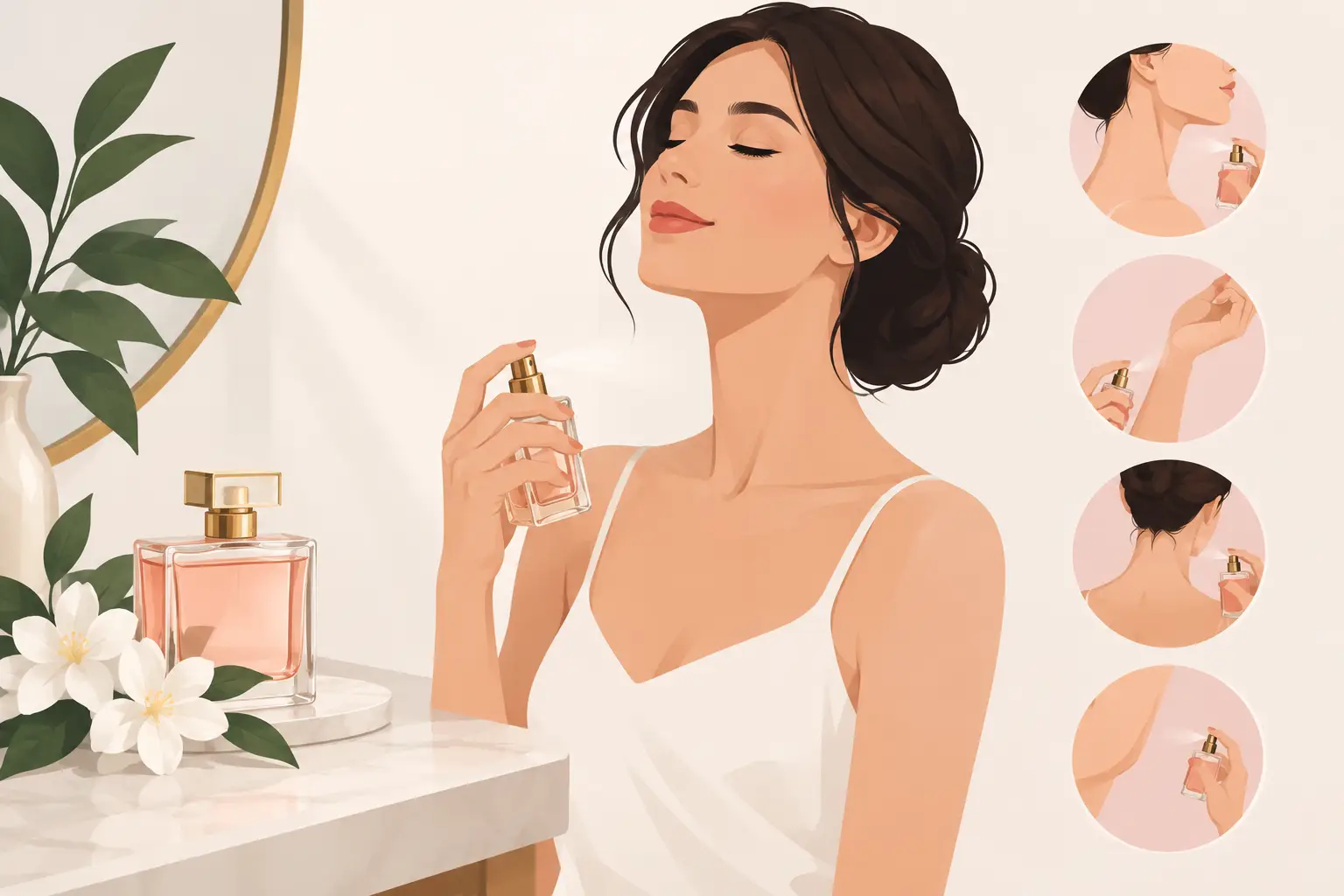
Distance matters too. Hold the atomizer about 10 to 15 centimeters from your skin and apply a light mist rather than a concentrated stream. This distributes the liquid evenly and allows the alcohol to evaporate naturally, letting the top notes emerge clearly.
Choose Pulse Points, but Not All at Once
Pulse points are areas where blood flow is closer to the surface and the skin gives off gentle warmth. That warmth helps perfume project gradually. The wrists, neck, behind the ears, inner elbows, and décolletage are especially effective places.
You do not need to perfume every one of them. For a subtle daytime presence, two sprays on the neck and one on the wrists are usually enough. If you want a more enveloping trail for dinner, a celebration, or a special evening, add a touch behind the ears or in the crook of your elbows.
The amount depends on the concentration. An Eau de Parfum can usually take between three and five sprays, depending on its intensity and the occasion. A deeper, more concentrated Extrait de Parfum calls for a lighter hand: two or three touches can provide extraordinary longevity. With a body mist, you can be more generous, as it is designed to create an airy, refreshing sensation.
Do Not Rub Your Wrists: Let the Perfume Develop
Rubbing your wrists after spraying is a very common gesture, but it works against the fragrance. Friction suddenly raises the skin’s temperature and disrupts the natural development of the top notes. As a result, the perfume may lose delicate nuances or smell different during its first few minutes.
After spraying, let it air-dry. Give it a few seconds. A well-applied perfume unfolds in layers: first you will notice the liveliest notes, such as citrus, fruit, fresh spices, or aquatic accords; then its floral, creamy, or amber heart will emerge; finally, woods, musks, vanillas, or resins will melt into your skin.
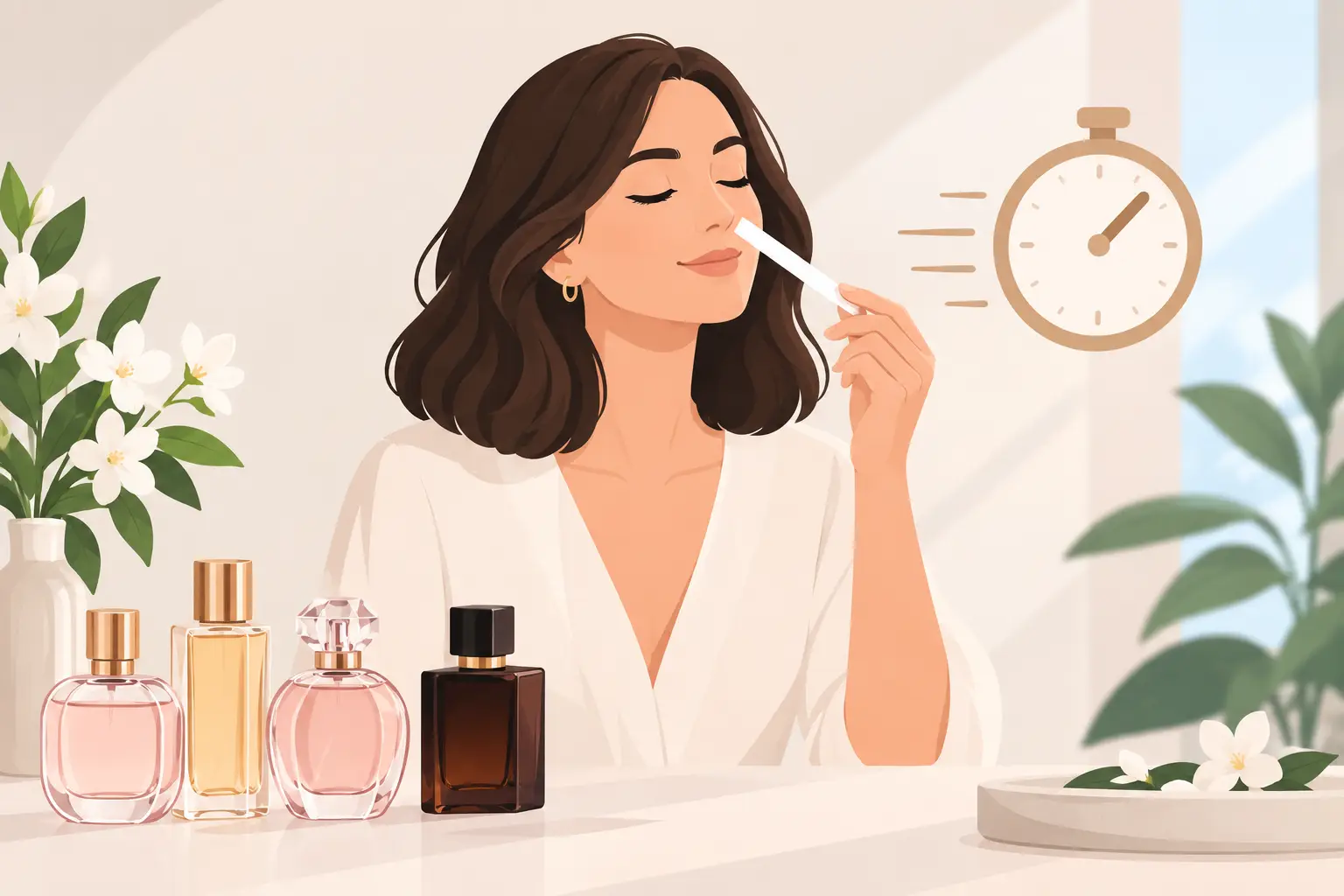
There is something special about this pause. You do not need to decide whether a fragrance is right for you in the first instant. Let it speak for at least half an hour before deciding how well it fits your style and your skin.
Perfume on the Neck, Clothes, and Hair: What Works Best
Skin is the ideal place to appreciate the full evolution of a composition, but clothes and hair can extend its presence. Each option has its own nuances.
Applying perfume to clothing can make the scent last longer, especially on natural fabrics such as cotton, wool, or cashmere. However, some formulas can leave marks on silk, delicate linen, leather, or light-colored fabrics. Spray from a distance and choose less visible areas, such as the inside of a jacket, the hem of a coat, or a dark scarf. Never apply it directly to jewelry or accessories.
Hair holds fragrance very well, but traditional perfume contains alcohol and can dry it out with repeated use. A more caring alternative is a hair perfume. It is formulated to wrap the hair in a soft, pleasant trail, especially as it moves. If you occasionally use a conventional fragrance, spray a cloud into the air and pass your hair beneath it without bringing the bottle close to the scalp.
A balanced option is to combine skin and fabric: two sprays on pulse points and a light mist over clothing. You will achieve elegant projection without letting the perfume invade other people’s space.
Adjust the Application to Your Perfume and Your Plans
Not every fragrance calls for the same ritual. Fresh perfumes with citrus, tea, marine notes, or clean musks often feel best with a slightly broader application, especially in spring and summer. On hot days, they project quickly, so it is best to start with a small amount and add one more spray only if you need it.
Sweet, oriental, amber, spicy, or vanilla-based compositions have a stronger presence and usually last longer. They are especially enveloping in autumn and winter, but in enclosed spaces they can feel intense if applied without restraint. Two well-chosen points are more memorable than six sprays in a row.
Context matters too. For the office, a class, or a journey on public transport, aim for an intimate trail: low on the neck, on the wrists, or inside the elbows. For a date or an outdoor dinner, you can add the hair or an area of clothing. And if you are giving perfume as a gift, remember that fragrance has no fixed gender: what matters is how it feels on the person, not the label of a category.
Mistakes That Make Perfume Last Less
Keeping the bottle in the bathroom is one of the most common mistakes. Humidity, temperature changes, and direct light accelerate the formula’s degradation. Store your perfume in a cool, dry place away from sunlight, preferably in its box or inside a cabinet.
Another mistake is reapplying out of habit without checking whether the fragrance is still present. We often stop noticing our own perfume because of olfactory adaptation, while people nearby can still smell it. Before adding more, ask someone you trust or check the scent around your neck or wrist. If only the base notes remain, the perfume may still be doing its job with a quieter elegance.
Do not confuse intensity with quality either. A fragrance designed to leave an impression does not need to announce itself from several meters away. The best trail is the one that invites people closer.
Create a Ritual That Feels Like You
Applying perfume is a brief gesture, but it can bring order to the start of your day or transform the way you get ready to go out. Choose a fresh, luminous fragrance when you seek clarity, a fruity or floral composition for a more spontaneous mood, or a deep, enveloping scent when you want to feel more present.
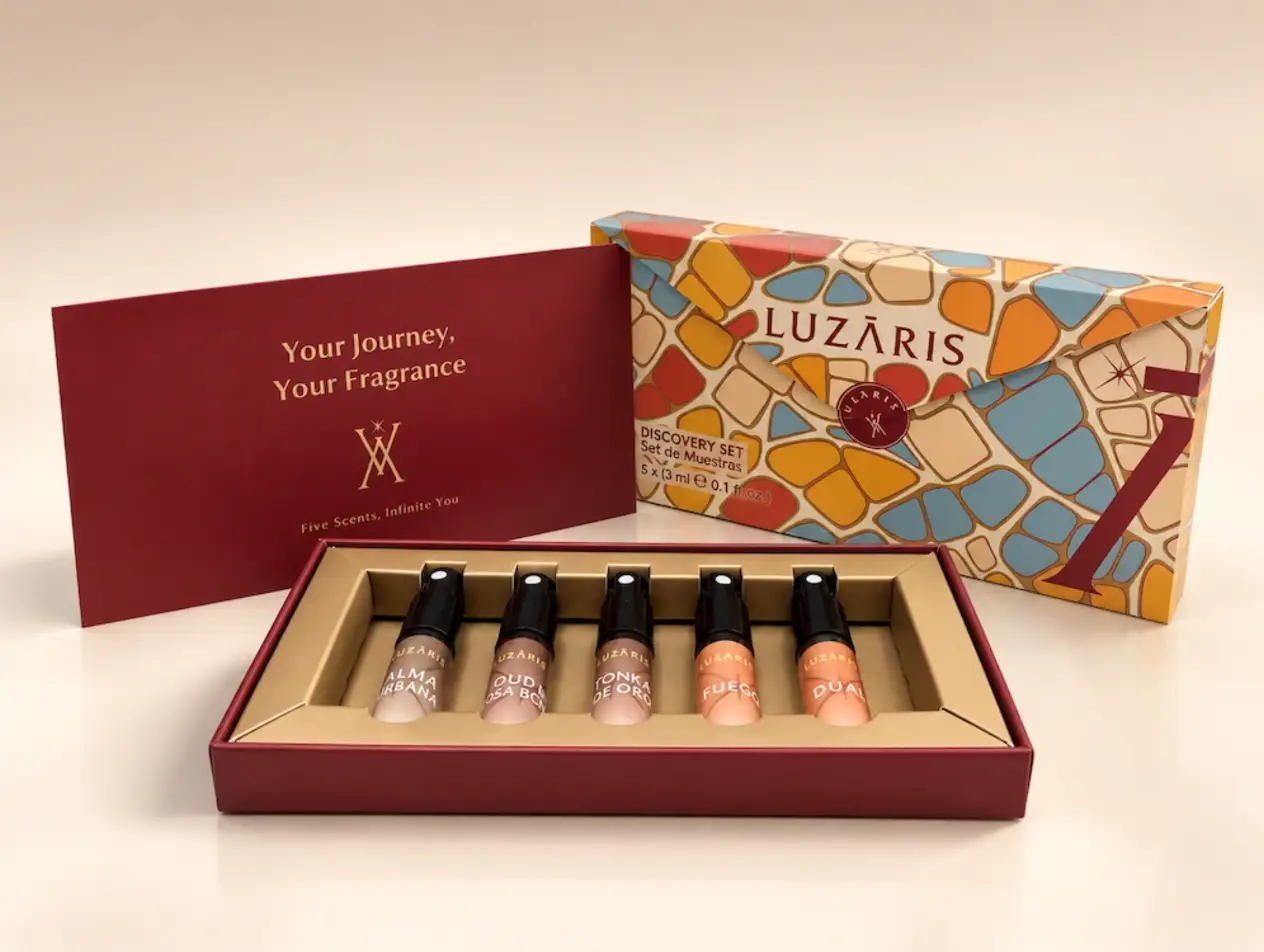
If you still do not know which concentration, olfactory family, or level of intensity suits you, trying before choosing is the smartest decision. A sample kit lets you compare how each scent changes over the hours and discover which one truly feels like your own. At Luzaris, that search can begin with a personalized recommendation and end with a fragrance that accompanies your way of being in the world.
The next time you apply perfume, do not think only about how much to use. Think about the moment you want to create: a few sprays on hydrated skin and in the right places can turn a scent into a personal signature.