Some perfumes are recognisable before you even look at the bottle: a citrus opening that wakes you up like a Mediterranean breeze, a vanilla that wraps around you as the evening falls, a woody base that stays close to the skin. A test to find your ideal perfume isn’t about boxing you into an olfactory family, but about translating your style, your memories and your daily rhythm into a fragrance that truly feels like yours.
Luzaris was born in Barcelona, where the sun meets the sea, with a simple idea: the luxury of a good perfume shouldn’t be a privilege. That’s why we’ve put together this guide —and an AI-powered test that answers in about 30 seconds— so you can choose with confidence, without overpaying and without collecting bottles you never use.
A test to find your ideal perfume starts with the way you live
The question isn’t just which perfume smells good. It’s which one suits you when you’re rushing out the door, when you want to make a good impression or when you’re looking for calm at the end of the day. A fragrance is a silent extension of your identity: bright and spontaneous, deep and enveloping, serene or decidedly magnetic.
Before thinking about specific notes, look at your everyday preferences. If you choose clean-lined clothes, enjoy a freshly aired home and prefer a discreet presence, you’ll probably connect with fresh, musky or citrus compositions. If you love soft fabrics, long lunches that linger into the afternoon and warm details, you may find your place among sweet, amber, creamy or vanilla accords.
There are no right answers, and no perfumes reserved for women, men or a particular profile. Categories can guide you, but the most interesting result appears when you choose freely. A unisex perfume can have the fruity spark you were looking for, or the elegant wood that makes you smell your wrist again and again throughout the day.
The 5 questions in the perfume test
A good perfume test doesn’t need to be long. It needs questions that reveal which sensations you’re looking for and which you’d rather avoid. Answer these five and you’ll get a far more accurate recommendation.
1. What kind of presence do you want to leave?
Think of sillage as the distance at which you want your perfume to be noticed. For the office, classes or close-up plans, many people prefer a fragrance that keeps them company without filling the whole room. Citrus, sheer florals, aquatic notes and clean musk work beautifully in that register.
If you want to leave a mark at a dinner, a celebration or a date, more intense, enveloping compositions are a great choice. Amber, woods, spices, leather or gourmand notes bring character and a recognisable trail. Intensity doesn’t mean excess: well chosen, it comes across as elegant and personal.
2. Which scents do you already enjoy outside the perfume world?
Your answer might lie in a drink, a dessert, a landscape or your skincare routine. If you love the scent of clean skin, look for musks, soft white flowers or cotton accords. If you’re drawn to the Mediterranean summer —an afternoon at Barceloneta beach, salt on your skin, citrus in the sun— you may connect with bergamot, mandarin, neroli, marine notes or a subtle coconut, in the spirit of Brisa Marina or Coconut Fever.
Those who enjoy coffee, cinnamon, vanilla or chocolate usually feel at home with sweet, gourmand perfumes such as Tonka de Oro or Dulce de Luz Intense. Even so, it’s worth trying different versions: a vanilla can be airy and luminous or dense and nocturnal, and a rose can be fresh and dewy or intense and velvety. The note matters, but the way it’s combined changes the result completely.
3. When will you wear it?
You don’t need a perfume for every occasion, but it helps to think about the main context. For daytime, spring or warm weather, a fresh, fruity fragrance feels light. For evenings, autumn and winter, amber, spicy and woody accords gain depth and longevity.
Seasonal rules aren’t set in stone. Some people love a soft vanilla in August and others wear citrus all year round. If a fragrance makes you feel good, you decide when the right moment is; the adjustment lies in the number of sprays and in how and where you apply it.
4. Are you looking for longevity, projection or both?
They’re different concepts, and understanding them avoids disappointment. Longevity is how long the perfume remains noticeable on skin or clothing. Projection is how far it radiates around you, especially during the first few hours. A fragrance can last a long time and stay close, or project strongly at first and soften later.
Higher concentrations usually offer more presence. Our Eau de Parfum range strikes the ideal balance for everyday wear, while our Extrait de Parfum contains a higher concentration of essence for those who want their fragrance to stay with them from morning to night. If a long-lasting trail is your priority, look for bases of woods, vanilla, amber, musks or resins (here are more ideas on long-lasting perfumes). If you prefer something light to reapply, a body mist is a fresh and versatile alternative.
5. What don’t you want to smell?
This answer is just as useful as knowing what you like. Perhaps intense sweet scents feel heavy to you, white flowers too dominant or smoky woods too serious. Saying so from the start makes the journey much shorter.
It’s also worth distinguishing between a note you dislike and a bad experience with one particular perfume. You may not have connected with a rose fragrance, yet be surprised by a fresh rose blended with fruit or musk. In perfumery, nuances change first impressions.
How to test a perfume and get it right
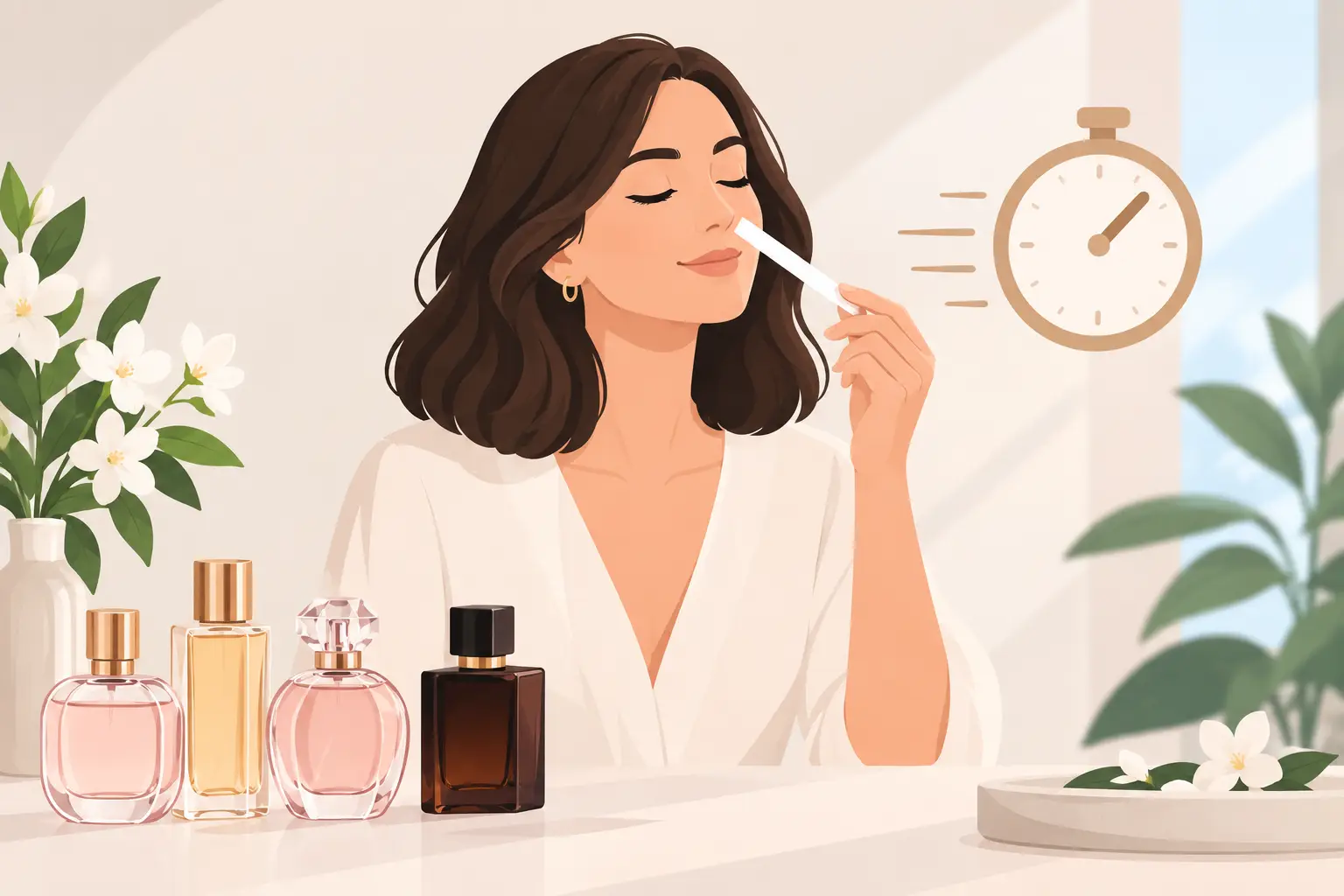
A blotter strip helps you discover the top notes, that bright first impression you get when you spray. But your ideal perfume is decided on the skin: pH, body temperature and hydration make the same fragrance evolve differently on each person.
- Test no more than two or three perfumes in a single visit so you don’t overwhelm your sense of smell.
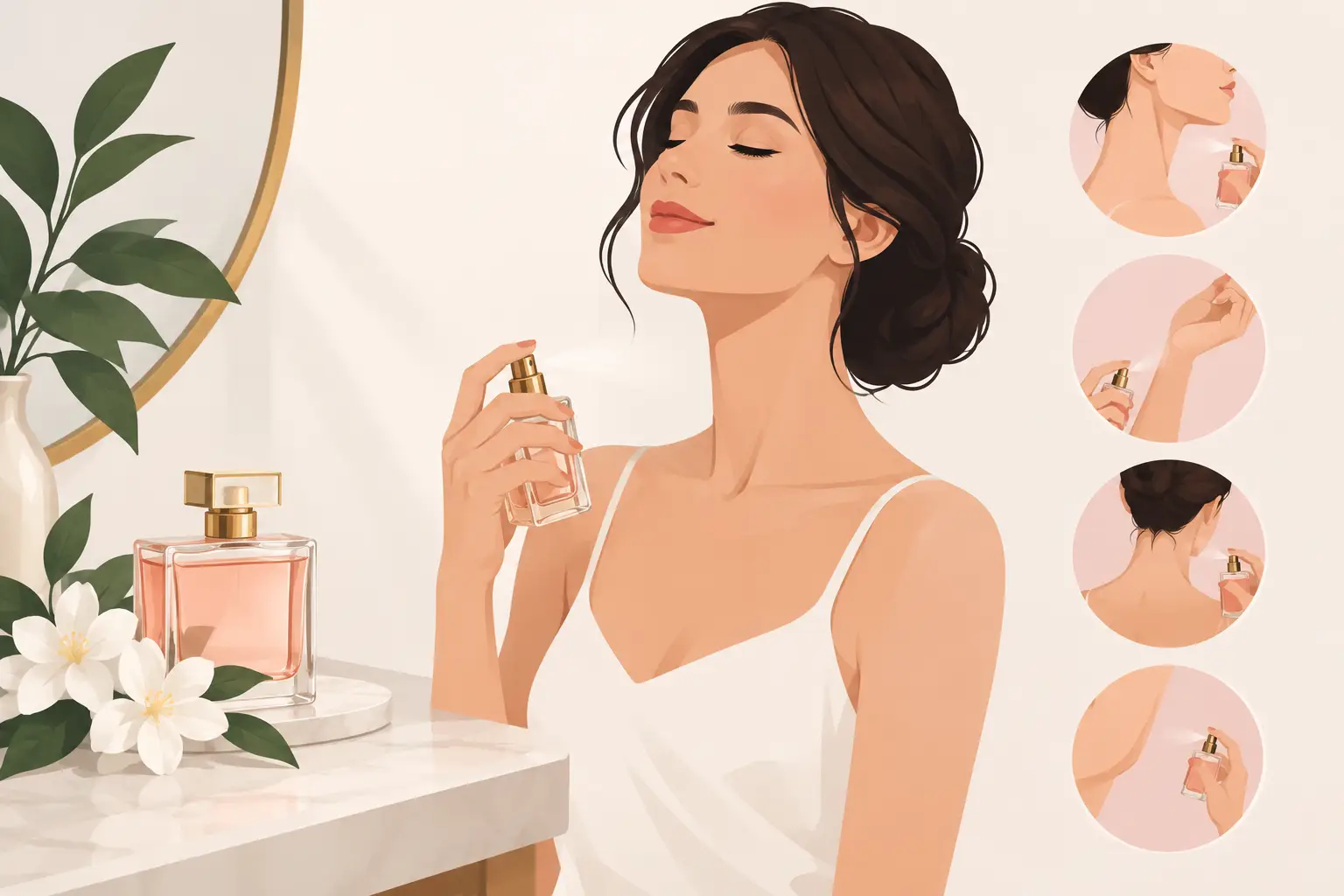
- Apply one to each wrist or to the inside of your forearm, without rubbing: rubbing breaks up the top notes and speeds up evaporation.
- Wait at least 20 minutes: that’s when the heart of the composition appears, with its flowers, fruits, spices or woods.
- Smell it again a few hours later to discover the base, the most intimate and long-lasting part.
Ask yourself whether you still feel like wearing it, whether it feels comfortable and whether it suits your clothes, your plans and your energy. A perfume doesn’t have to impress everyone; it has to make you want to wear it again.
The sample kit: the smartest way to decide
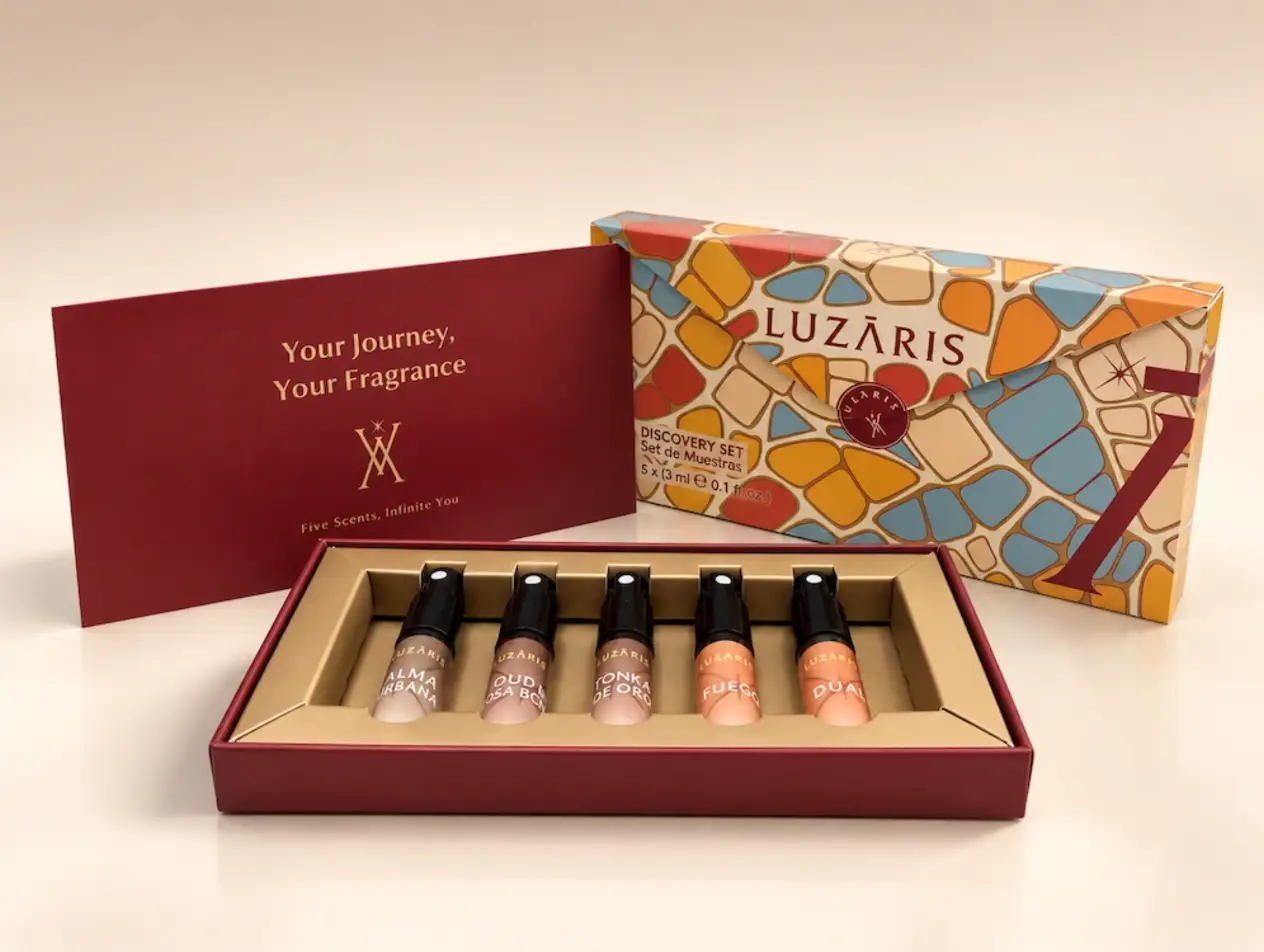
If you’re torn between several options, a perfume sample kit lets you test without rushing and in your real routine: on public transport, at the office, outdoors or on a special night out. Luzaris Discovery Sets cost €19.90 and include a 30% coupon for your next online purchase, so trying costs you almost nothing. And if you already know your favourites, you can create your own Discovery Set.
AI perfume test: your recommendation in 30 seconds
Some days you feel like exploring at your own pace, and others you want a precise answer. At Luzaris, our AI-powered perfume test —Discover my fragrance— turns your answers into a personalised suggestion in about 30 seconds. It’s the most direct way to go from “I don’t know what to choose” to a selection that matches the notes, intensity and style you’re looking for.
Technology guides you, but your nose decides. If you’re in Barcelona, come and visit our shop: our team will help you compare similar alternatives —a fresh option for every day, a more intense one for the evening or an Extrait for maximum longevity— and try them on your skin. Affordable luxury, with perfumes from €39.90.
Frequently asked questions about finding your ideal perfume
Does a test to find your ideal perfume really work?
Yes, as a starting point. A good test narrows hundreds of options down to two or three fragrances that match your taste. The final decision comes when you try them on your skin, ideally with a sample kit.
How long does the Luzaris perfume test take?
About 30 seconds. You answer questions about your style, your favourite scents and the occasion, and the artificial intelligence suggests the fragrances that suit you best.
What’s the difference between Eau de Parfum and Extrait de Parfum?
Extrait de Parfum has a higher concentration of essence than Eau de Parfum, so it usually lasts longer and leaves a more noticeable trail. Eau de Parfum is more versatile for everyday wear.
How do I know if a perfume suits me?
If after several hours you still enjoy the base notes, it feels comfortable and you want to wear it again the next day, that’s a good sign. Try it on different days before deciding.
Your ideal perfume may change, and that’s a good sign
You don’t need a single fragrance forever. Your tastes shift with the seasons, your travels and the memories you collect. The perfume that represents you this autumn may not be the one you want to wear by the sea next summer.
Take the test, try without preconceptions and give yourself time to notice how it evolves on your skin. When a fragrance makes you feel more like yourself, there’s no need to look for further explanations: you’ve found your perfume. Discover your ideal fragrance at Luzaris or explore our best sellers.