Searching for a “perfume sillage guide” usually hides a very specific question: you want a fragrance that gets noticed, but that doesn’t enter the room before you do. At Luzaris we hear it every day in our shop at Carrer de Boters 11, in Barcelona’s Gothic Quarter: the question isn’t just “does it smell good?”, but “how will it feel around me?”. Finding that balance has less to do with rigid rules and more to do with understanding how a scent behaves on your skin, in your routine and in the moments when you want to leave a mark.
Sillage is that delicate presence that lingers in the air as you pass by. It can be intimate and silky, fresh like a morning by the sea, or deeper and more enveloping as evening falls. In Barcelona, where the sun meets the sea, we learn this early: there is no perfect sillage for everyone. There is the one that suits the way you are.
Perfume sillage guide: what it really means
Sillage, also called projection, describes the distance at which other people can perceive a perfume as it evolves. It isn’t quite the same as longevity. A fragrance can stay close to the skin for many hours and still project softly. Another can feel very present at first and then become a more personal scent. What’s more, the same perfume doesn’t behave the same way on every skin.
Thinking about sillage helps you choose with more intention. If you work in shared spaces, you might look for an elegant presence that is noticed up close. If you like your perfume to be part of your entrance at a dinner, a night out or a special event, a composition with more body may suit you. Either way, the key lies in balance and in applying the right amount.
Concentration matters too, although it doesn’t decide everything on its own. An Eau de Parfum usually offers a rich, versatile expression, while an Extrait de Parfum from our INTENSE line can feel more intense, deep and enveloping. Even so, the olfactory family, the quality of the ingredients and your skin chemistry completely change the result. If you want to go deeper, we explain it in what is an extrait de parfum and in the difference between eau de parfum and eau de toilette.
Choose your sillage according to the way you live
Before looking at specific notes, think about the context. A perfume doesn’t have to serve a single purpose. You can have a bright fragrance for every morning and a warmer one for plans that start at dusk. Choosing by moment of use keeps a beautiful composition from feeling out of place.
For workdays, classes or close-up plans
Citrus, clean, aquatic, sheer floral or soft woody compositions tend to create a restrained sillage. They feel polished and easy to wear without taking up other people’s space. Look for scents that give you a feeling of freshly cared-for skin, clean clothes or a Mediterranean breeze.
At Luzaris, these fragrances leave a fresh, close sillage:
- Alba BCN: bright lemon, spearmint, rosemary and basil; the energy of a Mediterranean morning.
- Azul Sereno: cypress, lemon and oak, like the breeze along the Catalan coast.
- Jardín Claro: ripe pears and white freesias, a sheer, luminous floral.
- Alba de Iris: African orange flower, neroli, mandarin and iris, for a soft elegance.
Here it’s best to start with just a few sprays and wait a few minutes. Sometimes the first impact seems stronger than it will be later. A fragrance needs time to settle and show its true character.
For a date, a dinner or a special night
If you want more presence, amber, vanilla, spicy, woody or creamy floral notes tend to add volume. These accords can create a more enveloping sillage, especially on skin and in mild or cool temperatures.
That doesn’t mean they have to feel heavy. A fruity opening can bring light to a warm base, and a fresh note can make a dark wood feel more modern. Contrast is one of the reasons a fragrance can be memorable without losing elegance.
If you prefer a middle ground, with character but without weight:
- Rosa Musc: ripe plum, musk and heliotrope, velvety and mysterious.
- Eco de Luz: exotic fruits, blackcurrant and musk, warm and luminous.
- Camino Azul: orange blossom, bergamot and vanilla.
- Viento Libre: bergamot, pepper and violet leaves, fresh and dynamic.
And when you want a truly enveloping sillage, the INTENSE line is your territory:
- Tonka de Oro Intense: noble oud, saffron, tonka bean and ambergris.
- Humo Dulce Intense: tobacco leaves, Madagascar vanilla, cocoa and precious woods.
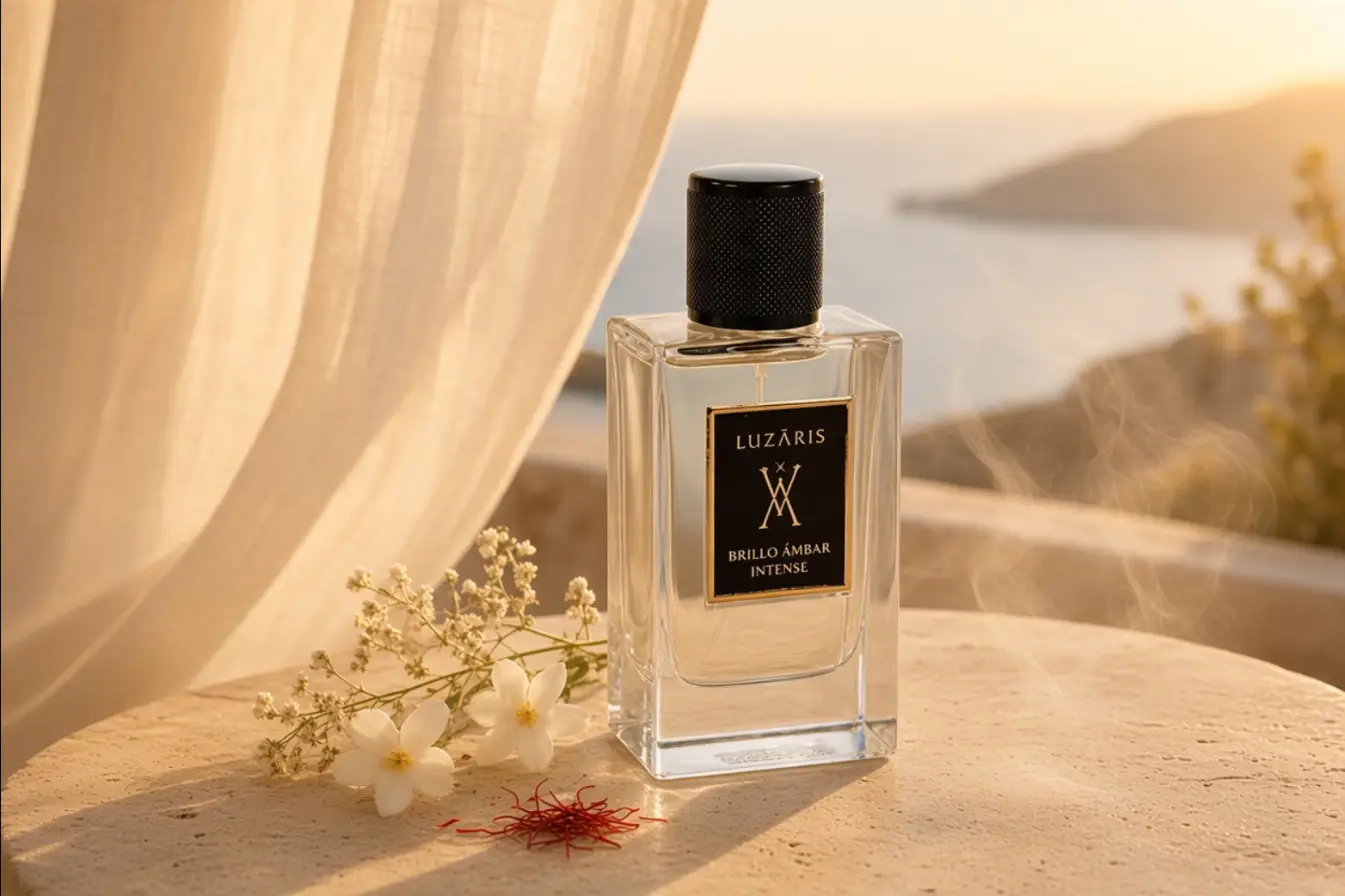
- Brillo Ámbar Intense: jasmine, saffron and ambergris.
- Alma Fiel Intense: white flowers and warm vanilla.
For summer and warm days
Heat amplifies perfume. A sillage you love in winter can feel very different under the sun. In summer, citrus, juicy fruits, light florals, marine accords and clean woods work especially well. If you prefer a sweet profile, apply it sparingly or save it for the evening.
It’s not about giving up your favourite notes, but about adjusting how you apply them. A body mist or hair perfume can also add a lighter, closer layer, ideal for moving through the day without overdoing it (find out more in what is a body mist):
- Brisa Rosa: rose water and pink grapefruit, like a morning on Barcelona’s beaches.
- Medianoche: bergamot, black tea and a touch of jasmine.
- Vainilla Clara: pure vanilla over a musky base.
The notes that change how sillage is perceived
A perfume evolves in phases. Top notes are the first you notice: citrus, fruits, aromatic herbs or fresh spices can give a vibrant start. Then comes the heart, where flowers, creamy accords or spicier facets usually live. Finally, the base gathers ingredients that add depth, such as woods, musks, resins or vanilla.
This evolution matters because you shouldn’t decide based on the first few seconds alone. If you fall for a sparkling opening but the base feels too dense for you, the full experience may not be right. Likewise, a fragrance that seems discreet at first can reveal a beautiful sillage after half an hour.
Clean musks tend to create a soft, close, comforting halo. Woods can add structure and sophistication. Amber accords bring warmth and presence, while fruits and citrus brighten the composition. No family guarantees a particular sillage on its own: it depends on how it interacts with the other notes.
How to test a perfume to know if it’s for you
A blotter helps you narrow things down, but the final decision happens on the skin. Spray a fragrance on your wrist or forearm, let it dry and avoid rubbing. Rubbing can alter the opening and make you perceive the scent less faithfully.
Then give it time. Smell it again after ten minutes, after half an hour and later on. Ask yourself how it makes you feel, not just whether it smells good. Is it comfortable? Do you want to keep wearing it? Does it follow your rhythm, or does it demand too much attention?
It’s also worth testing a maximum of three or four perfumes per visit. When your nose gets tired, everything starts to blend and choosing becomes harder. If you need to live with several options before deciding, a Luzaris Discovery Set lets you discover them unhurriedly, on different days and occasions: 5 fragrances for €9.90, in a ready-made selection or one you create yourself from 32 essences. It arrives in a box inspired by Barcelona’s trencadís mosaics and includes a 30% coupon for your next online purchase.
Application changes more than you think
The same fragrance can feel radically different depending on where and how you apply it. Pulse points such as the neck, wrists or inner elbow add warmth and help diffuse the scent. If you prefer a softer sillage, try applying less or choose areas a little further from the face, such as the torso.
Moisturised skin usually holds perfume better than very dry skin. You can first apply an unscented body cream and let it absorb. For a lighter feel, spray from a distance over the body without creating an excessive cloud. The goal isn’t for the perfume to arrive before you, but to be discovered up close.
Hair and clothing can also change the perception. For hair, use formulas designed specifically for that area. On fabrics, test first on an inconspicuous spot, as some materials react differently. And if you’d like your home to have its own sillage too, take a look at our guide on how to choose a long-lasting home fragrance.
When you don’t know which sillage represents you
Sometimes you know what you don’t want, but you can’t put a name to what you’re looking for. Perhaps you avoid overly sweet scents, or you like woods but don’t want them to feel serious. It’s a very common doubt, and you don’t need to master perfumery vocabulary to resolve it.
At Luzaris, our AI fragrance test guides you in 30 seconds based on your preferences, your style and the sensations you’re after. It’s a quick way to narrow down options and reach profiles that make sense for you; you can also read how to choose a perfume according to your personality. If you’re in Barcelona, come and see us at our Gothic Quarter shop: the team can help you compare how each option evolves on your skin.
The best sillage isn’t the one that gets the most compliments, but the one that lets you move with confidence and ease. Choose a fragrance you’ll want to smell again at the end of the day: that’s usually the clearest sign you’ve found something that’s truly yours.